
At 70, Mzee Ogeli Kakeshe is learning new ways to grow food on his dry land in Kajiado. With help from his family and training from Light Up Hope, he has harvested and sold more than 300 kilograms of vegetables using Zai pits.
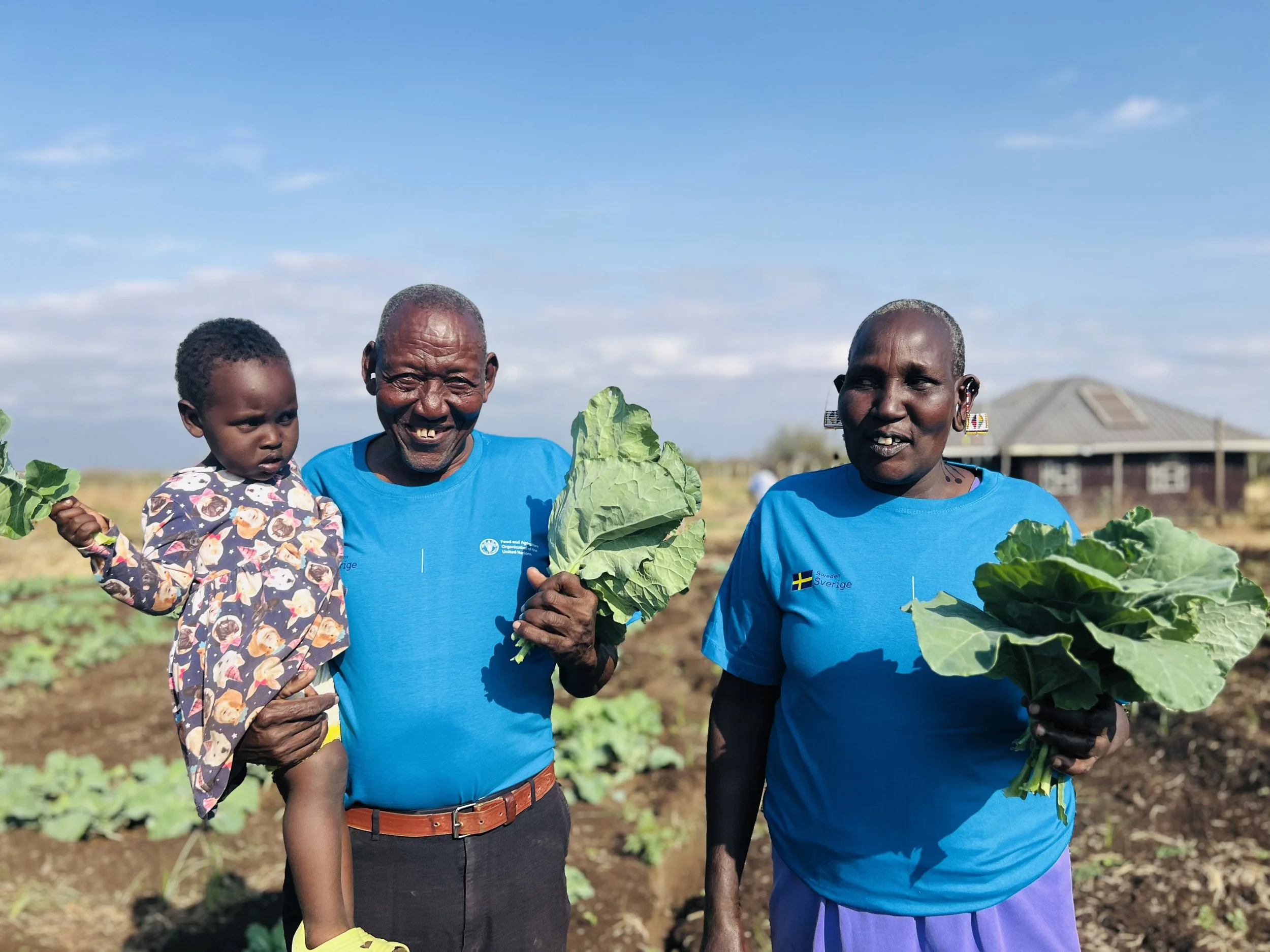
Mzee Ogeli Kakeshe and his wife show vegetables harvested at their home in Kajiado (Credit: Gracious/Light Up Hope)
At 70, He Was Ready to Learn Something New
For most of his life, Mzee Ogeli Kakeshe has depended on cattle for his livelihood. Growing vegetables on his land in Kajiado had not always worked out. With little rainfall and dry conditions, farming was difficult, and he had little reason to believe things could be different.
Then his grandchildren told him about agricultural training sessions where farmers were learning how to grow food using little water and limited space.
There was a challenge. The trainers did not speak his language fluently, and following the lessons would not be easy. But Mzee Kakeshe and his wife, Ann, were willing to try. With their grandsons helping to translate, they attended the training and began learning new ways to farm.
Today, Mzee Kakeshe is growing tomatoes, spinach and other vegetables on his land.
At 70, he is discovering that there is still something new to learn from the land he has known all his life.
How Simple Farming Lessons Brought New Hope
For Mzee Kakeshe, attending the training meant being willing to try something different. He and Ann-his wife- had to work through the language barrier, relying on their grandsons to help them understand the lessons and put them into practice.
One of the methods they learnt was Zai pit farming. The technique involves digging small planting pits that help collect and retain water around crops, making it useful in areas where rainfall is limited.
The family wanted to apply what they had learnt, but they could not afford dam liners for other types of gardens. Instead of giving up, they started with Zai pits.
It was a practical choice that suited what they had available. They planted vegetables, cared for them and began harvesting produce they could use at home and sell.
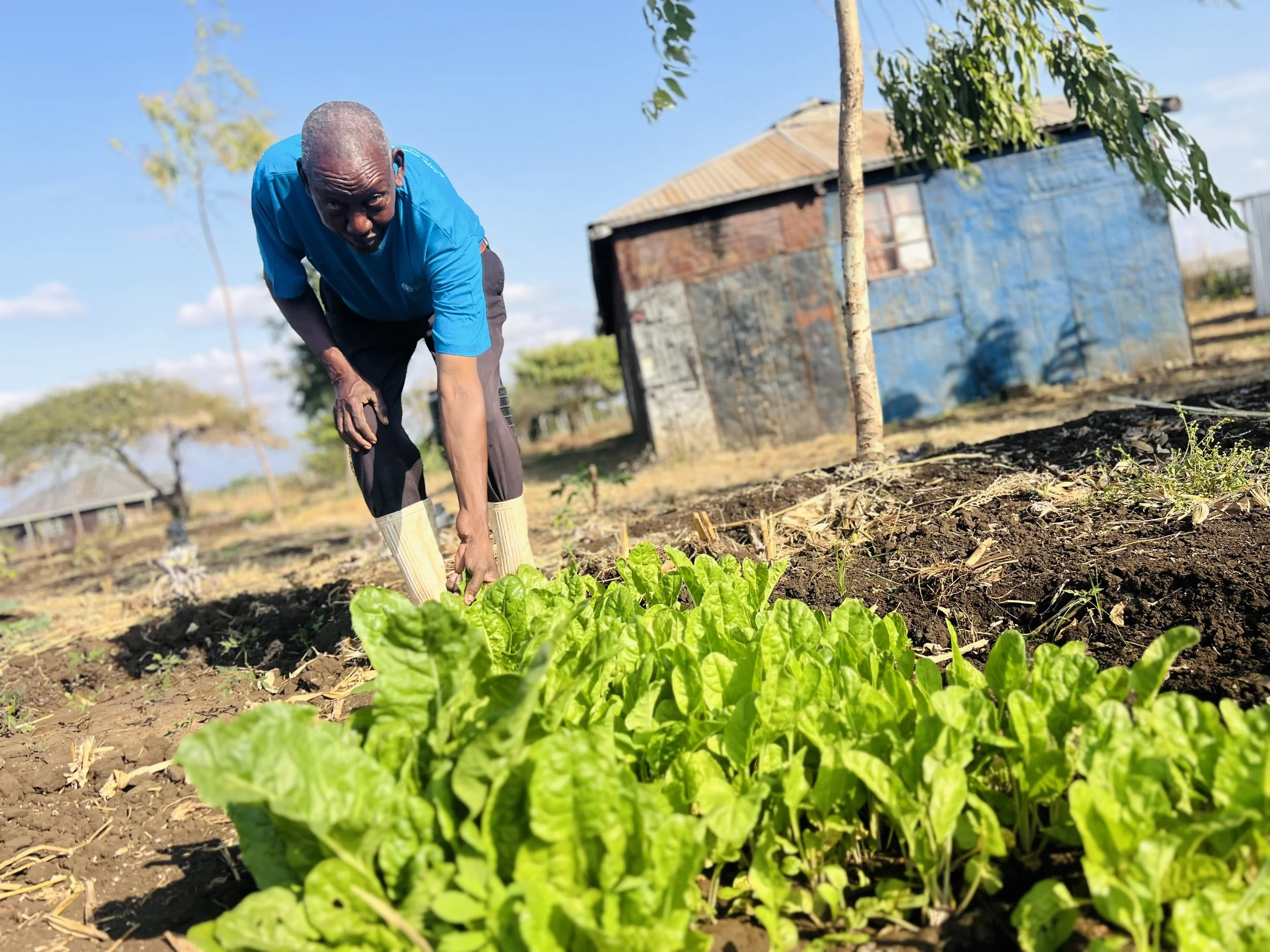
Mzee Kakeshe puts his agricultural training into practice by growing vegetables using Zai pits
(Credit Gracious/Light Up Hope)
More Than 300 Kilograms Harvested From Dry Land
The results have given the family a reason to keep going. Mzee Kakeshe has harvested and sold more than 300 kilograms of vegetables grown using Zai pits.
The garden also means the family can harvest fresh vegetables for their own meals instead of relying entirely on what they can buy. Selling part of their produce brings in additional income, giving them another way to support their household.
For a family farming in an area where water is scarce, being able to grow food on their own land makes a difference.
Mzee Kakeshe is not stopping at Zai pits. He and his family are now working on expanding their kitchen garden through vertical gardening, another method taught through the project. It allows vegetables to be grown upwards, making better use of limited space.
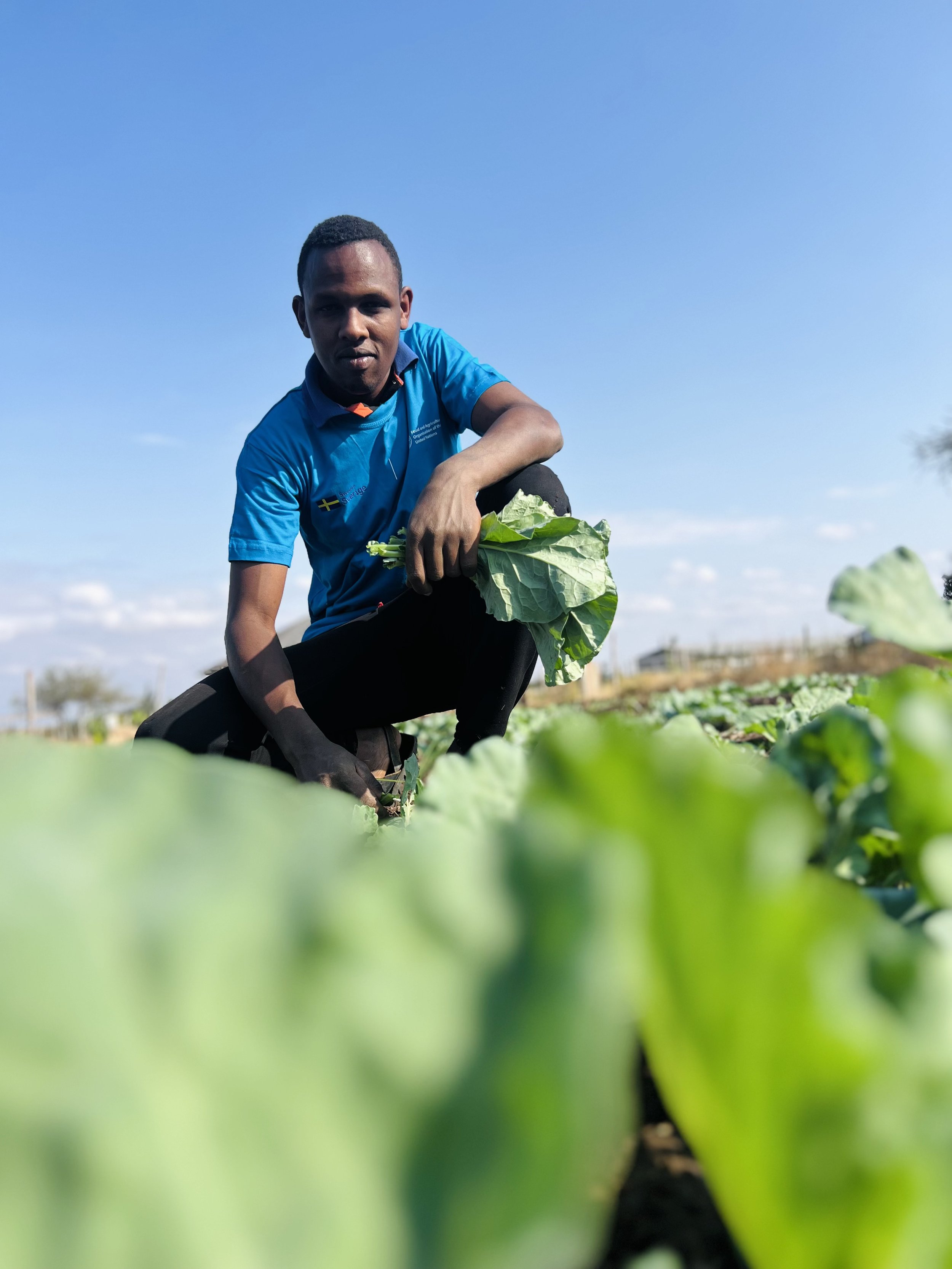
The Kakeshe family has harvested and sold more than 300 kilograms of vegetables from their farm.
(Credit Gracious Aganda/Light Up Hope)
Taking Climate-Smart Farming Beyond the Classroom
Mzee Kakeshe's experience is part of a wider effort by Light Up Hope to help families and schools grow more of their own food.
Through a Food and Agriculture Organization of the United Nation(FAO) supported project Protective and Productive Safety Nets for Sustainable Food Systems Transformation: Scaling-up the Climate-Friendly Home-Grown School Meals Programme in Kenya – Kajiado funded by the Swedish Embassy, Light Up Hope has been training farmers and schools in practical agricultural methods.
Working with Paranae Comprehensive School and PCEA Naserian School, the project has reached more than 800 farmers. Training covers methods such as Zai pits, mandala garden basins and cone gardens, which help farmers make better use of available water and improve soil fertility. Farmers and schools are also learning ways to grow vegetables, maize and beans and keep poultry.
The aim is to make it easier for households and schools to access nutritious food, even when rainfall is unreliable. At schools, growing vegetables can also help supplement the meals served to learners. At home, families can use what they learn to improve their own food supply and earn income from surplus produce.
For Mzee Kakeshe, the training has already made its way from the classroom to his farm. His grandchildren helped him get started, his grandsons helped him understand the lessons, and now the family is seeing the results in their garden.
Get to know more about our work!
Through our work with communities in Kenya, we support approaches that improve access to food, strengthen livelihoods and create opportunities for the next generation.
